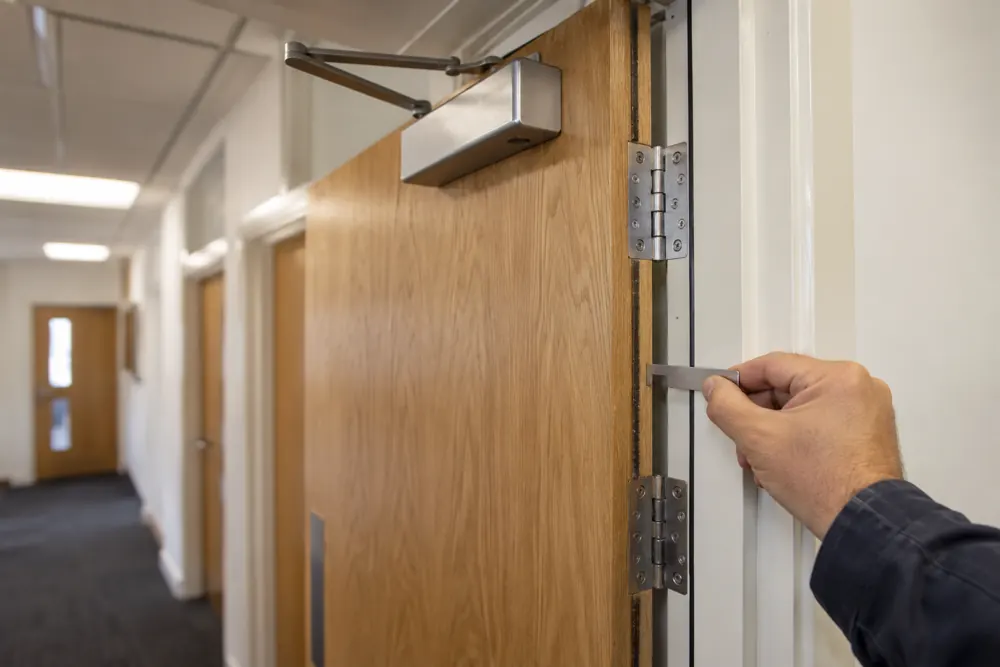
Why The Whole Assembly Matters
A fire door is part of the building's fire separation and escape arrangements. The leaf alone cannot establish whether the installed assembly is suitable. Damage to the frame, missing seals, unsuitable ironmongery or changes to glazing can affect the intended performance.
An inspection considers the evidence available for the particular doorset and its use. Gaps and clearances need to be assessed against the relevant product information and applicable guidance. Avoid applying an arbitrary single measurement to every door material, configuration and threshold detail.
What An Inspection Can Cover
The agreed scope can include visible condition, hinges, closing devices, latches, seals, glazing and whether the door closes correctly. Double doors and hold-open arrangements need attention to sequencing and release. The surrounding construction and any obvious damage at the frame should also be recorded.
A non-intrusive visit has limits. Concealed frame fixings, hidden voids or uncertain product identity may need a separate investigation. Ask the inspector to state where the conclusion relies on visible evidence and where certification, drawings or specialist opening-up would be needed.
Commercial Premises And Applicable Guidance
The Fire Safety Order sets the general duty to maintain relevant fire precautions in commercial premises. The inspection programme should reflect the risk assessment, the building's fire strategy and how frequently doors are used or damaged. A busy corridor door can need different attention from a rarely used store door.
BS 8214:2026 provides recommendations for fire-resisting and smoke-control doors within its scope. Product evidence and manufacturer instructions remain important. Inspection must account for the actual door construction rather than treating one code of practice as a universal approval for all doorsets.
A Report That Supports Repairs
Each door should have a useful identifier and location so that the findings can be followed up. Photographs and descriptions help a maintenance contractor distinguish adjustment, compatible component replacement and more substantial defects. The report should explain where an issue affects closing, separation or confidence in the evidence.
Repairs need to preserve the intended performance. Cutting the leaf, substituting seals or fitting a new closer without checking compatibility can introduce another problem. Obtain an appropriate repair scope and retain the supporting information alongside the inspection report and asset register.
Planning And Cost Considerations
Door count, configuration, accessibility and available records affect the cost of inspection. The time needed to inspect a pair of heavily used corridor doors may differ from a simple single door. Restricted departments, access control and escort requirements also influence the visit.
Tell us whether you need a condition survey, a scheduled inspection or a review of previously identified defects. Share any door register, plans and past reports. Ask whether labelling, photographs, reinspection, remedial specifications and inaccessible doors are covered by the proposed quotation.
Inspect After Changes To The Door
Access control upgrades, new floor finishes and replacement hardware can change how a door operates. A door that previously closed correctly may catch on flooring or fail to latch after an alteration. Include these changes in the information given to the inspector and avoid assuming that earlier records still describe the current assembly.
Keep the evidence for any replacement closer, hinge, seal or glazing component. Where the original product cannot be identified, discuss how the proposed repair will be assessed before ordering parts. An inspection report is most useful when it supports a traceable decision about the work needed, the evidence supporting it and any further check required once that work is complete.
How The Work Progresses
Agree The Door Register
Identify the doors and their locations. Review the fire strategy and any product records available.
Inspect And Operate
Examine accessible components and check closing and latching action within the agreed inspection scope.
Record The Defects
Describe findings by door reference, with photographs and clear notes about missing evidence or limitations.
Arrange Suitable Repairs
Prioritise the actions and use compatible repair methods. Keep repair evidence and arrange follow-up where necessary.
Fire Door Inspection FAQs
Does A Fire Door Inspection Certify Its Fire Rating?
A fire door inspection cannot establish a fire rating from appearance alone. The conclusion depends on product evidence, installation details and the limits of the inspection. A visual report should identify defects and uncertainties clearly, rather than claim that an undocumented door has achieved a particular tested performance merely because it looks suitable.
How Often Should Commercial Fire Doors Be Inspected?
Commercial fire door inspection intervals should reflect the fire risk assessment, use, wear and manufacturer guidance. Doors on busy routes may need closer monitoring than lightly used doors. Arrange additional checks after damage, alterations or failed closing, and keep routine staff observations separate from the agreed competent inspection programme for the building.