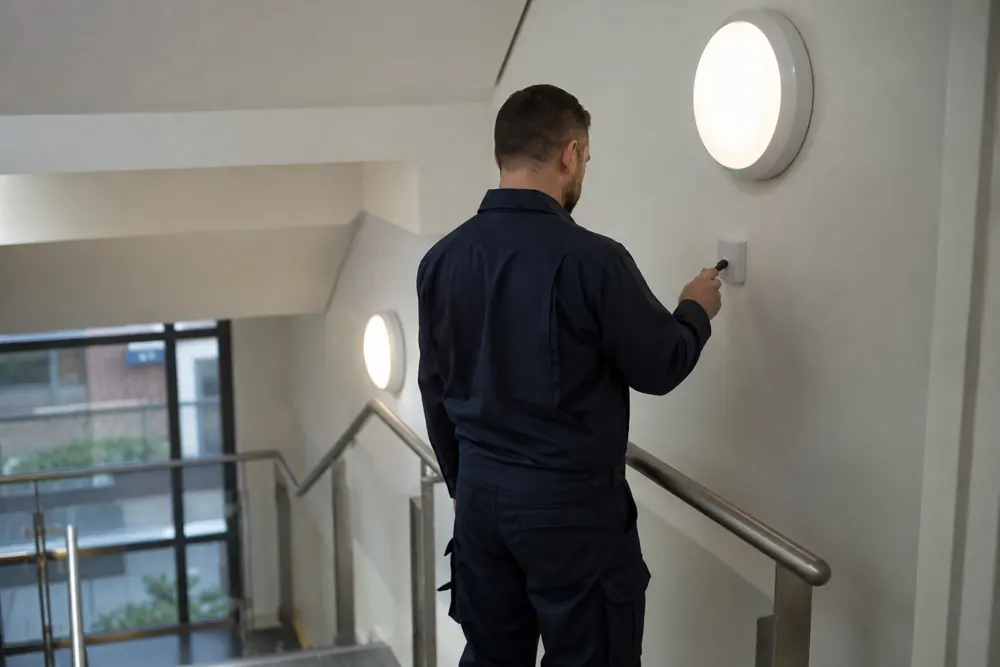
What Needs To Be Checked
Emergency lighting is a system, not simply a set of illuminated exit signs. Escape route lighting, open areas and locations with particular hazards may have different requirements. Start with the design records and asset list to understand what has been provided and which areas are covered.
A test should identify the fitting or circuit involved and distinguish a failed lamp, charging problem, damaged equipment and inadequate records. A working indicator light alone does not demonstrate useful emergency illumination. The outcome needs to relate to the fitting's emergency operation and intended duty.
Function And Duration Tests
A short function test checks operation when the normal supply is interrupted under controlled conditions. A duration test examines operation for the system's rated period. These are different checks and should not be confused when requesting a quote or reviewing a contractor's report.
Battery discharge affects the protection available immediately afterwards. Plan testing so that the recharge period can be managed safely, taking account of occupation and the risk assessment. Staff should know who controls the test and what to do if a fitting fails or a supply cannot be restored.
Standards For The Lighting System
For emergency lighting at your Leicester premises, BS 5266-1:2025 provides the relevant code of practice. Related references include BS EN 1838 for emergency lighting requirements and BS EN 50172 for emergency escape lighting systems. The design, system type and current maintenance information determine the detailed requirements relevant to your premises.
The Fire Safety Order also underpins the duty to maintain relevant fire safety measures. A recorded lighting test supports that duty but does not establish that the original design covers every required location. Changed partitions, escape routes or room uses can require a design review as well as testing.
Keep A Usable Asset Record
Give fittings a consistent identifier and record their location so that repairs can be traced. Central battery and self-contained systems need different operational information. Automatic test systems can provide useful data, but someone still needs to review faults and arrange appropriate corrective work.
A useful report separates the test performed, the observed result and any further investigation required. Missing drawings, inaccessible fittings or unknown battery ratings should be recorded. Facilities staff need to know which actions restore an existing fitting and which concern a possible coverage gap.
Access, Remedial Work And Costs
The number of fittings, system arrangement, test facilities and access height affect the work involved. A central battery installation may need specialist support. Occupied sites may require staged tests, escorts or an agreed out-of-hours visit to manage disruption and the recovery period.
Share your previous test reports, layout drawings and list of known failures. Ask whether the quotation includes a function test, duration test, asset register update and separate pricing for remedial work. Battery replacement, fitting replacement and any electrical changes should be defined before you approve additional expenditure.
Responding To A Failed Fitting
A failed fitting needs a location reference and a practical follow-up, not just a mark in a test sheet. Tell the responsible person which route or area is affected and obtain competent advice on managing the deficiency until repairs are complete. An illuminated neighbouring fitting does not automatically establish that the failed location has adequate cover.
After repair, keep evidence of the work and the relevant verification. If several fittings show similar failures, consider whether age, charging conditions or another common cause needs investigation. Updating the asset register helps distinguish new equipment from older fittings and gives the next technician a reliable starting point when planning the maintenance and testing programme.
How The Work Progresses
Review The Lighting Records
Establish the system arrangement, fitting locations and known defects. Confirm what type of test is required.
Plan The Test Window
Coordinate with the responsible person so that occupation, temporary arrangements and battery recovery are considered.
Test And Identify Failures
Carry out the agreed checks and record results against the relevant fitting or circuit reference.
Repair And Follow Up
Arrange corrective work and retain the test and repair records. Review coverage if the building layout has changed.
Emergency Lighting Testing FAQs
Is A Function Test The Same As A Duration Test?
An emergency lighting function test is different from a duration test. The first checks operation during a short simulated supply failure, while the second checks operation for the rated period. Confirm the scope when booking, and consider occupation and battery recovery before a discharge test so that the building remains safely managed afterwards.
Do New Partitions Affect Emergency Lighting?
New partitions can affect emergency lighting by changing escape routes, obscuring illumination or creating rooms that were not part of the original layout. A successful test of existing fittings does not establish adequate coverage after alterations. Review the design and fire risk assessment, and arrange suitable changes rather than relying only on the previous asset list.