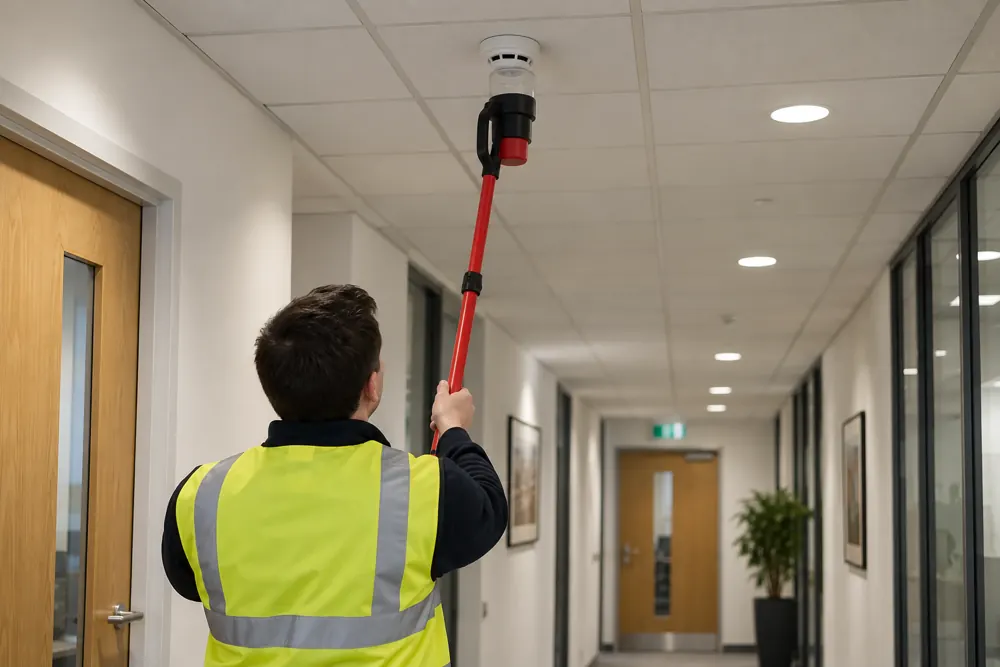
Establish What Is Already Installed
A useful maintenance arrangement begins with the panel make, system type, device information and available service history. Existing drawings, zone plans and commissioning records show what the system was intended to protect. Missing information needs to be identified rather than silently treated as complete.
Taking over an unfamiliar system may require an initial condition review. Older equipment, inaccessible detectors and unsupported components can change what can be maintained or repaired. Ask whether the proposed visit is routine servicing, a takeover inspection or investigation of a particular fault.
Routine Testing And Specialist Visits
A planned maintenance visit checks relevant system functions and records the findings. The exact schedule depends on the system, risk, manufacturer instructions and applicable recommendations. Routine user tests continue between visits and should be managed through the site's fire safety arrangements.
The person carrying out routine tests needs suitable instructions. They should know how to notify affected occupants and any alarm receiving centre, avoid unwanted callouts and restore the system afterwards. A successful user test does not establish that every detector and interface is operating correctly.
Standards And Management Duties
BS 5839-1:2025 includes maintenance recommendations for commercial fire alarm systems. The Fire Safety Order requires applicable safety equipment to be maintained and relevant defects addressed. Inspection records should describe the scope of testing and any limitations or outstanding items.
Agree who is responsible for arranging access and approving repairs. A service certificate does not erase known defects or settle every design question. If the maintenance visit identifies inadequate coverage or uncertain interfaces, the next step may be further assessment rather than a simple part replacement.
Investigating Faults And Unwanted Alarms
A repeated alarm is a pattern to investigate, not a reason to leave a detector disabled. Record when activations occur, which devices are involved and what work was happening nearby. Environmental contamination, building changes or equipment faults can need different corrective actions.
A panel fault may relate to power supplies, circuits, devices or communication arrangements. Tell us the exact displayed condition and any recent work, without opening the equipment or changing settings. Where protection may be impaired, the responsible person needs prompt competent advice about interim management measures.
Quotations For Ongoing Support
The panel type, device numbers, building layout and availability of drawings influence maintenance cost. High ceilings, secure rooms, specialist access equipment and escorted visits may require extra time. Monitoring arrangements and callout cover should be described separately from a planned service schedule.
Ask whether replacement parts, batteries, remedial labour and investigation are included. Share previous reports and unresolved defects before agreeing the scope. A maintenance contract should make clear how faults are reported, when separate approval is required and what information you will receive after a visit.
Make The Logbook Useful
A logbook should connect the reported problem with the action taken. Record the panel indication, device or zone reference, date and circumstances of a fault or unwanted alarm. After a visit, retain the findings and repair information rather than relying on a verbal explanation that may not reach the next facilities manager.
Check the status of any disabled devices and agreed temporary arrangements at the end of testing. Where a defect remains, identify the person responsible for arranging its resolution and what further approval is needed. Do not treat an incomplete repair as closed simply because the engineer has finished the scheduled visit or the panel has temporarily stopped displaying a fault.
How The Work Progresses
Review The History
Collect system details, drawings and previous reports. Identify repeated faults and outstanding actions before the visit.
Agree Test Arrangements
Coordinate access, alarm monitoring notifications and any effects on doors or other connected equipment.
Inspect And Record
Carry out the agreed checks and record equipment conditions, test limitations and findings needing attention.
Close The Actions
Approve repairs where necessary and retain evidence of the outcome with the system logbook.
Fire Alarm Maintenance FAQs
Does A Weekly Test Replace Alarm Servicing?
Leicester premises need specialist alarm servicing as well as their weekly user tests. User checks and competent inspection serve different purposes, and both need to fit the site's maintenance arrangements. Keep the results and any faults in the logbook, and ask for advice when a test fails or a fault indication remains after the system is restored.
Can You Maintain An Existing Alarm System?
Existing fire alarm maintenance depends on the equipment, its condition and the availability of technical support and parts. Provide the panel make, photographs and previous reports when enquiring. An initial review may be needed before a service scope is agreed, especially where drawings are missing or the system has been altered over time.